Booster XT Official Website › Blog › Reading A Label With No Numbers
How To Read A Supplement Label That Prints No Numbers
Most men’s formulas withhold their amounts. A few withhold them completely. Here is what you can still work out, what you cannot, and how to decide anyway without pretending the gap is not there.

- A blend total is bad. No total at all is worse, because a total at least sets a ceiling.
- Ingredient order still tells you something, and less than people assume.
- Capsule size caps the whole formula at about one gram, whatever the panel says.
- Seals describe factories and inputs, never the contents of the capsule.
The three levels of disclosure
Supplement labels fall into three groups, and knowing which one you are holding is the first move.
| Level | What you get | What you can work out |
|---|---|---|
| Full disclosure | A milligram figure against every active, with standardisation for extracts | Everything. Compare each ingredient against its trial range directly |
| Proprietary blend | A list of names and one total, for example 750 mg | A ceiling. No ingredient can exceed the total, so the strongest claims can be ruled out |
| No figures at all | Names only | Only what physics and the capsule size imply |
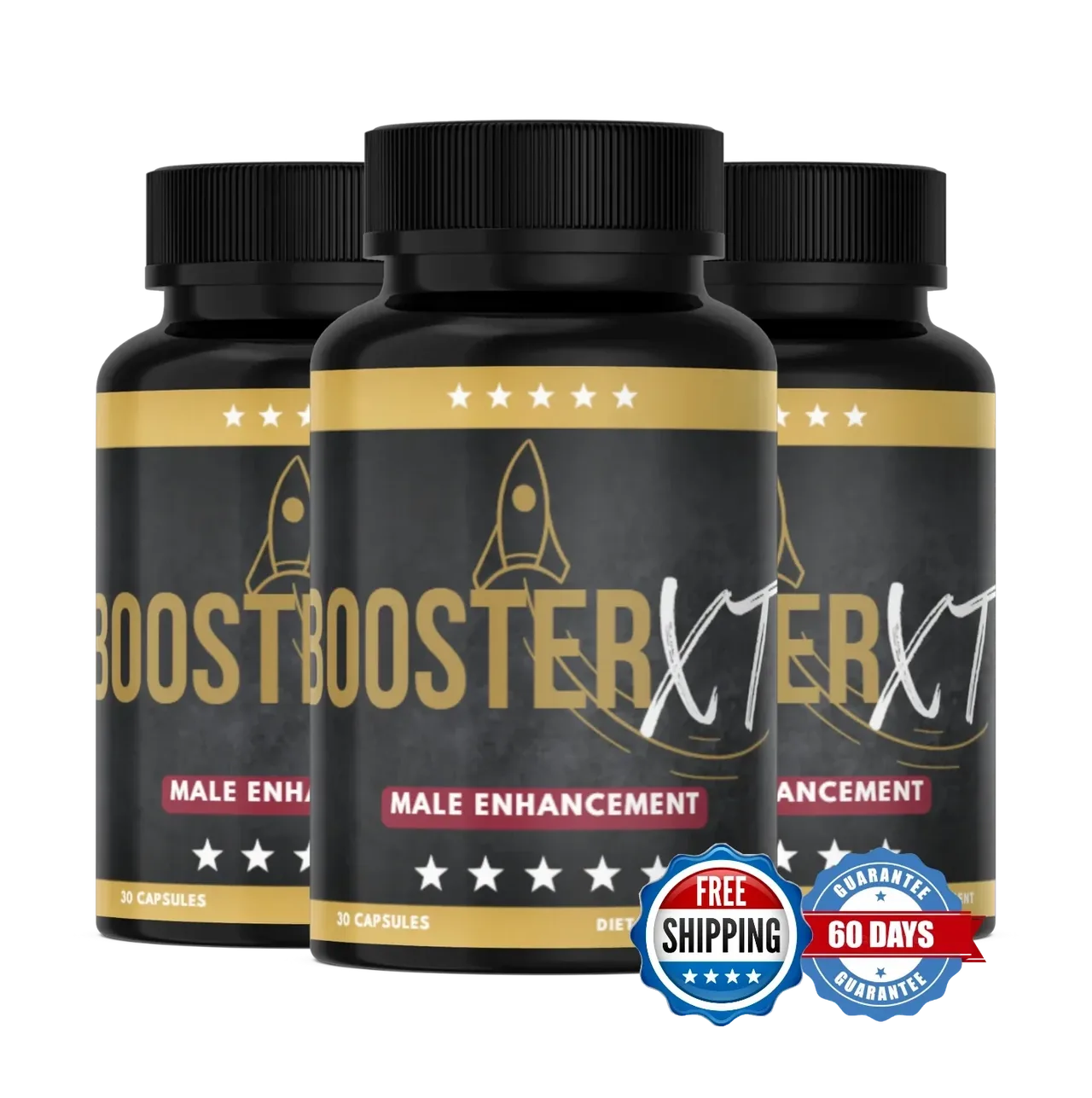
Most of this category sits in the middle. A label in the third group is unusual, and Booster XT is in it: six actives named, no figure against any of them and no blend total either. The ingredients page prints that six times rather than once.
What ingredient order tells you
On a food label, ingredients are listed by descending weight, and that is genuinely informative. On a supplement panel the convention is weaker: actives are commonly listed in descending order within a blend, but it is not a guarantee and it is not always followed.
What order does reliably tell you is what the formulator wants you to notice. The first name is the marketing lead. On this panel that is L-citrulline, which is a defensible choice because it has the clearest evidence of the six.
What it does not tell you is the gap between first and last. A panel listing six ingredients in descending order is compatible with an even split and equally compatible with one ingredient taking ninety per cent and five taking a dusting. Both look identical on the label.
The capsule-size ceiling
This is the most useful thing you can do with a label that gives you nothing, and almost nobody does it.
A size 0 capsule holds roughly 400 to 700 milligrams of powder. A size 00, the largest most people will swallow comfortably, holds roughly 700 to 1,000 milligrams. Whatever a panel claims, the total contents of one capsule cannot exceed that.
- Divide by the number of actives. Six ingredients in a size 00 capsule averages under 170 milligrams each, before you allow for any filler or flow agent.
- Compare against the trial range. Citrulline trials use three to eight grams. Carnitine trials use two to three grams. Maca trials use one and a half to three grams.
- Draw the obvious conclusion. A single capsule cannot deliver a trial dose of any of them, let alone several at once.
That reasoning does not depend on trusting the manufacturer about anything. It is physics and it applies to every multi-ingredient capsule on sale, including the one this website sells.
What the seals actually certify
Seals are the most visually prominent element on most labels and among the least informative. Sorted by how much they tell you about the capsule:
- A third-party certificate of analysis. Names a laboratory, names a lot, reports identity, potency and contaminants. This is the only one that is about the contents. It is also the rarest.
- GMP certification. About the factory: documented procedures, cleaning records, batch traceability. Genuinely worth something and not about your capsule.
- FDA-registered facility. The factory told the FDA it exists, which is a legal requirement. Not approval, and no supplement has approval. The FDA explains the distinction.
- Non-GMO, gluten free, dairy free, vegetarian. Claims about inputs, usually made by the manufacturer about itself.
- Natural ingredients. A word with no regulatory definition on a supplement label.
- Doctor formulated. Means nothing unless a clinician is named with a credential and a statement of what they did.
A label with no numbers, printed as a label with no numbers.
This website prints not published wherever the Booster XT panel withholds a figure, six times on the ingredients page alone. Sixty days from purchase to change your mind.
$207 — three bottles at $69 each
Order Booster XT On The Official WebsiteShips from the United States · one charge, no subscription · 60-day money-back guarantee
Why labels withhold amounts in the first place
There are four reasons a manufacturer gives, and it is worth knowing which ones hold up, because the answer changes how much benefit of the doubt a blank panel deserves.
- Protecting the formula from copying. The traditional justification for a proprietary blend. It is weak: a competitor with a laboratory can reverse-engineer a capsule in an afternoon, and the only party the secrecy actually protects the formula from is the person swallowing it.
- Flexibility across production runs. Botanical raw material varies, and a published figure has to be hit every time. This is a real manufacturing consideration and it is what standardisation exists to solve.
- Regulatory caution. A stated amount is a claim that has to be accurate. Some manufacturers would rather say nothing than commit to a number they would then have to verify.
- The amounts are small. The uncomfortable one, and the reason the practice persists. A panel that printed 30 milligrams beside an ingredient whose trials used three grams would answer its own marketing.
Only the second of those is a reason a buyer should accept, and it is solved by standardisation rather than by silence. The others are reasons to discount what the label implies, which is the habit this whole post is about.
Reading the claims backwards
Here is a trick worth knowing. On a label with no amounts, the claims tell you more about the seller than about the product, and you can read them as a signal of care.
Claims that stay inside structure and function, supports rather than treats, indicate somebody read the rules. Claims that drift into treating a condition indicate the opposite, and the FTC guidance explains exactly where that line sits.
The strongest signal of all is a page that names claims it will not make. Almost nobody does this, because it costs persuasion. When you find one, it is worth more than any seal on the bottle, and you should check whether the refusals are real or decorative. Ours are here, five of them, taken from the manufacturer’s own artwork.
Deciding without the numbers
You can still make a rational decision. It just is not a decision about efficacy, because the information for that one does not exist.
- Bound the downside. What does it cost, and can you get the money back? A stated refund window in days, from a stated date, with a named returns address, is the one protection that is actually enforceable.
- Buy the smallest pack that covers the window. Not the cheapest per day. A six-month supply bought against a two-month window is four months of a decision you have not made yet.
- Check the interactions yourself. Look up each named ingredient, because the label will not list them. That is how you find things like a levodopa-bearing botanical sitting quietly on a panel.
- Set a date to judge it. Before you start, write down what would count as a result, then keep a one-line daily note. Without that, day sixty arrives as a feeling rather than a decision.
What to ask a seller
Reading a label well gets you most of the way. The last stretch is asking the seller directly, and how a seller answers is itself information.
Five questions, all of which a serious seller can answer and most cannot.
- What is the milligram amount of each active per serving?
- What is the standardisation ratio for each botanical extract?
- Which lot is currently shipping, and what is printed on the base of the bottle?
- Is there a third-party certificate of analysis for that lot, and may I see it?
- What is the capsule shell made of?
An answer to any of the five is worth having. A refusal to answer any of them is itself an answer. For the record, this desk can answer the third, holds a reference rather than a certificate for the fourth, and cannot answer the other three, which is stated on the testing page rather than avoided.
Note what you are really testing with those questions. Not the formula, which you cannot assess from the outside anyway, but whether the person selling it knows their own product and will tell you the awkward parts. A seller who answers three of five honestly is a better bet than one who answers five of five smoothly and vaguely.
The NIH consumer fact sheet and NCCIH are both free and neutral, and either will make the next label you pick up easier to read.
References
- U.S. Food and Drug Administration. Questions and Answers on Dietary Supplements. https://www.fda.gov/food/information-consumers-using-dietary-supplements/questions-and-answers-dietary-supplements
- Federal Trade Commission. Health Products Compliance Guidance. https://www.ftc.gov/business-guidance/resources/health-products-compliance-guidance
- National Institutes of Health, Office of Dietary Supplements. Dietary Supplements: What You Need to Know. https://ods.od.nih.gov/factsheets/WYNTK-Consumer/
- National Center for Complementary and Integrative Health. Dietary and Herbal Supplements. https://www.nccih.nih.gov/health/dietary-and-herbal-supplements

Every page, every journal post, the bottle facts and the ingredients go through review by Dr. Sevann Helo, MD before they ship. The seal beside this line is the manufacturer’s own “Doctor Formulated” mark. It names no clinician and cites no credential, so we do not treat it as a medical review and we have not invented one. What you get instead is a named desk with a method you can check: pages written from the Booster XT label and the paperwork this desk holds, published research linked in the sentence that uses it, and “not published” printed wherever a figure is not disclosed. Corrections are made on the page itself and the review date moves forward. Write to [email protected]. Last reviewed September 2026 by Dr. Sevann Helo, MD.