Booster XT Official Website › Guides
The Male Vitality Supplement Guide
Four ingredient classes account for almost every men's formula on sale. Here is what each one does, what the trials measured, and the four questions that decide whether any of it applies to the bottle in your hand.
Men's supplements are built from four ingredient classes: nitric oxide precursors, carnitine, traditional roots and polyphenols. The first has the clearest evidence and the smallest effect. The rest range from mixed to thin. Whether any of it matters to a given product depends on dose, form, standardisation and testing, and most labels disclose none of the four.
Nitric oxide precursors
This is the backbone of the category and the part with real science behind it. Nitric oxide is made in the endothelium from arginine, and it relaxes vascular smooth muscle. More nitric oxide means slightly wider vessels and slightly lower resistance, which is a genuine physiological effect with a genuine literature.
Arginine was the obvious supplement and turned out to be a poor one, because the liver clears a large share of an oral dose before it reaches the circulation. Citrulline solved that: it largely escapes first-pass clearance and is converted to arginine in the kidney, so it raises plasma arginine more reliably than arginine does. That is why most formulas now name citrulline.
The meta-analysis of controlled trials found a small reduction in blood pressure. The endurance meta-analysis found the performance effect modest and inconsistent. The cardiometabolic review is the readable overview. The word running through all three is small.
Doses in those trials sit between roughly three and eight grams a day. That figure is the one to hold on to, because it is the number almost no multi-ingredient capsule can physically contain.
Carnitine and the energy claim
Carnitine carries long-chain fatty acids across the inner mitochondrial membrane so they can be oxidised. That is real, uncontroversial biochemistry, and it is where every “supports energy production” line in this category comes from.
The leap is from requirement to benefit. A healthy man who eats red meat or dairy makes and absorbs enough carnitine for the transport step, and adding more does not obviously speed up a process that was not limited by it. The NIH fact sheet is careful about exactly this.
Where supplemental carnitine has shown something, it is in two places. Recovery after exercise is one. Idiopathic male infertility is the other, and the evidence review there found small trials and mixed results. The wider meta-analysis on sperm parameters lands in a similar place.
The question a label rarely answers. Which carnitine? L-carnitine, acetyl-L-carnitine and L-carnitine L-tartrate are studied separately and behave differently. A panel that says only “L-Carnitine” has told you less than it appears to.
Traditional roots and the reputation gap
Maca, velvet bean, tribulus, horny goat weed and fenugreek all arrive in this category with a long traditional history and a short trial record. The gap between the two is where most of the category's marketing lives.
Maca is the instructive case. The systematic review found few trials, mostly small and of limited quality, with a tentative signal on self-reported sexual desire. The best-known individual study reported an effect on desire and specifically found no change in serum testosterone. A whole industry of testosterone claims sits on top of an ingredient whose most cited paper says the opposite.
Velvet bean is different, and it is the one to take seriously. A double-blind study in Parkinson's patients found mucuna seed behaved like levodopa, because it contains levodopa. The systematic review covers that literature. A fertility study is what men's formulas usually cite instead.
An ingredient that works because it contains a prescription drug is an ingredient with prescription-drug interactions. That is not a reason to avoid it and it is a reason to know it is there, which is why a formula naming velvet bean without naming the interaction has left out the important half.
Polyphenols and the antioxidant claim
Pine bark, grape, pomegranate and green tea all appear as antioxidants. They are, in the narrow chemical sense: these compounds do neutralise free radicals in a test tube. The question is whether that produces anything in a person.
Decades of antioxidant trials have mostly answered no, which is one of the more instructive disappointments in nutrition science. The Cochrane review of maritime pine bark examined twenty-seven trials across a dozen conditions and concluded they were too small, too short and too inconsistent to support clinical use. That is unusually blunt language for a Cochrane conclusion.
Grape has done a little better where it has been measured directly. A controlled trial in men with metabolic syndrome found improved flow-mediated dilation and lower blood pressure from grape polyphenols, and the meta-analysis covers grape seed extract on the same endpoints.
Note the word seed. A great deal of grape research is on seed extract or whole grape powder rather than skin, and treating those as interchangeable in a citation is one of the commonest sleights of hand in this category.
What actually decides whether a formula is worth anything
Everything above is background. These four questions turn background into a judgement about a specific bottle.
| Question | Why it decides everything | Where to look |
|---|---|---|
| What is the dose? | An ingredient at a tenth of its trial dose is a different ingredient. This is the only question that cannot be worked around. | The Supplement Facts panel |
| What form is it? | Citrulline malate and citrulline are dosed differently. Grape seed is not grape skin. L-carnitine is not acetyl-L-carnitine. | The ingredient line, in full |
| Is the extract standardised? | 200 mg of an unstandardised extract can contain almost any amount of the active compound. | A ratio or a percentage beside the name |
| Has anyone tested it? | A certificate of analysis names a laboratory and a lot. A registration mark names a building. | A published certificate, not a seal |
Most labels in this category answer one of the four. A label that answers all four is unusual enough to be worth paying more for. The buying checklist turns these into something you can score a product against, including the one this website sells.
The hazard specific to this category
Men's supplements are the category most frequently found to contain undeclared prescription drugs. The FDA publishes a running notification list of products found to hold sildenafil, tadalafil or an analogue without declaring it. Those are real drugs with real contraindications, and a man on a nitrate who takes one without knowing is in danger.
This is why the channel matters more here than in most supplement categories, and why a product that produces a dramatic effect within an hour should raise suspicion rather than enthusiasm. Nothing in the four classes above works like that.
The FDA's consumer guidance and NCCIH are both worth ten minutes before any purchase in this category. MedlinePlus is the plainest of the three.
What to take away from all four classes
The honest summary is that this is a category of small effects and large claims. Citrulline produces a measurable but modest change in blood pressure at gram doses. Carnitine has a narrow set of uses and a wide set of claims. Traditional roots range from one with real pharmacology to several with almost no controlled record. Polyphenols are antioxidants in a test tube and have mostly disappointed in people.
None of that makes the category worthless. It makes it a category where the label matters more than the ingredient list, because an ingredient with a real effect at three grams has no effect at thirty milligrams and both are labelled the same way.
So the useful habit is to stop reading ingredient names as if they were results, and start reading them as questions: at what dose, in what form, standardised how, verified by whom. The buying checklist turns those four questions into eight things you can actually check before paying.

Every page, every journal post, the bottle facts and the ingredients go through review by Dr. Sevann Helo, MD before they ship. The seal beside this line is the manufacturer’s own “Doctor Formulated” mark. It names no clinician and cites no credential, so we do not treat it as a medical review and we have not invented one. What you get instead is a named desk with a method you can check: pages written from the Booster XT label and the paperwork this desk holds, published research linked in the sentence that uses it, and “not published” printed wherever a figure is not disclosed. Corrections are made on the page itself and the review date moves forward. Write to [email protected]. Last reviewed September 2026 by Dr. Sevann Helo, MD.
More about Booster XT
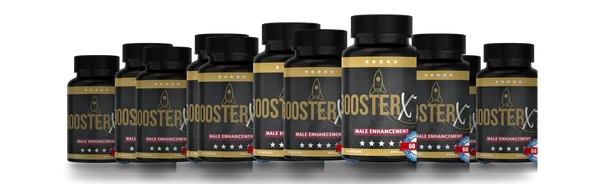
Order Booster XT on the official website.
If you have read the four questions and still want to try it, the sixty-day window is the other half of the protection.
$294 — six bottles at $49 each
Order Booster XT On The Official WebsiteShips from the United States · 60-day money-back guarantee · one-time payment, no subscription · lot BXT-26/BD-8812