Booster XT Official Website › Ingredients
Booster XT Ingredients: The Six Actives in Each Capsule
Six named ingredients, four plant extracts and two amino acids, with the research and the figure missing from all six.
Booster XT contains six named actives: L-citrulline, L-carnitine, pine bark extract, velvet bean seed extract, maca root extract and grape skin extract.
The label lists the names without milligram amounts. Velvet bean is a natural levodopa source and can interact with some prescription drugs.
Next, read how these ingredients are meant to work together.
Why the Booster XT panel is harder to read than most
A label can withhold information two ways. The common one is a proprietary blend: names plus a single total, so you know the blend weighs 750 mg but not how it is shared out. The rarer one, which is what happens here, is to name the ingredients and print no total at all.
That is worse in one way and better in another. Worse, because a blend total at least sets a ceiling and lets you rule out the strongest claims by arithmetic. Better, because the six names are printed individually rather than hidden behind a trademarked blend name, so you can look each one up. Every study linked below is therefore background on an ingredient rather than evidence about this capsule.
What we have asked the manufacturer for. A readable Supplement Facts panel, a milligram figure per active, the standardisation ratios, the levodopa content of the velvet bean extract, and which carnitine salt is used. Any one of the five would change what this page can say, and it goes up the week it arrives.
The six Booster XT ingredients, one at a time
In panel order. The dose chip on each row says the same thing six times, which is the honest summary of this label.
L-Citrulline
Not published Free amino acidThe first name on the panel, and the one with the clearest mechanism. Citrulline is converted in the kidney into arginine, and arginine is the substrate the body uses to make nitric oxide, which relaxes the smooth muscle in blood vessel walls. That is the whole of the circulation story, and it is a real one. Evidence: Mirenayat 2018 pooled the controlled trials and found a small reduction in blood pressure. Harnden 2023 pooled the endurance trials and found the effect on performance modest and inconsistent. Allerton 2018 is the readable overview of where the cardiometabolic evidence actually stands. Cormio 2011 is the paper most often waved at products like this one: twenty-four men, a single month, an open pilot rather than a controlled trial. The caveat that matters more than any of them: every one of those studies states its dose, usually 3 to 8 grams a day. This label states none, and a capsule holding six ingredients cannot contain several grams of any one of them.
L-Carnitine
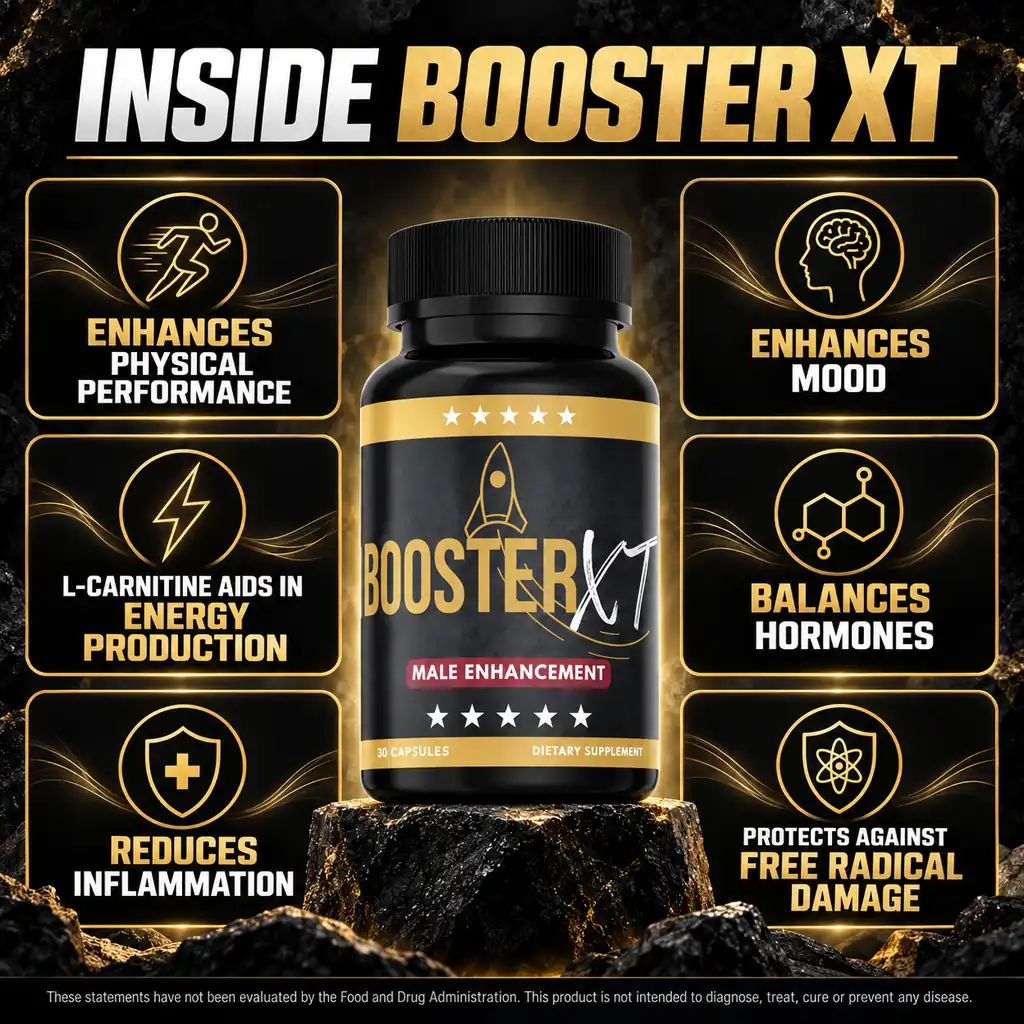
Not published Amino acid derivativeThe vendor's own listing art gives this ingredient its headline: “L-Carnitine aids in energy production”. That is fair as far as it goes. Carnitine carries long-chain fatty acids into the mitochondria, where they are oxidised. The body makes it and red meat and dairy supply it, so most men are not short of it. Evidence: Khaw 2020 is the review closest to what a men's formula is implying; it found the evidence for idiopathic male infertility weak and the trials small. Salas-Huetos 2018 pooled the wider supplement literature on sperm parameters. Fielding 2018 covers the exercise-recovery use, which is where the listing claim comes from. the NIH carnitine fact sheet is the neutral fact sheet and the place to start. What the label does not tell you: which carnitine this is. L-carnitine, acetyl-L-carnitine and L-carnitine L-tartrate behave differently and are studied separately. The panel names only “L-Carnitine”.
Pine Bark extract
Not published Pinus pinasterFrench maritime pine bark, sold in its standardised form under a trade name. It is a mix of procyanidins and phenolic acids, and it is the ingredient on this panel with the most trial history behind it. Evidence: the 2020 Cochrane review reviewed twenty-seven trials and reached an unusually blunt conclusion: too small, too short and too inconsistent to support clinical use. That is the honest headline and we are not burying it. Stanislavov 2003 is the small study pairing pine bark with L-arginine that men's formulas cite, and it was never independently replicated at scale. What matters here: the trials used a standardised extract at a stated milligram amount. “Pine Bark extract” on a panel with no figure and no standardisation ratio is not the same ingredient in any meaningful sense.
Velvet Bean
Not published Mucuna pruriens, seed extractThis is the ingredient to read carefully, and the reason this website carries a full interaction page. Velvet bean seed is a natural source of levodopa, the same molecule prescribed for Parkinson's disease. Depending on the preparation, seed powder runs at roughly 3 to 7 per cent levodopa by weight, and standardised extracts are sold far higher. Evidence: Katzenschlager 2004 is a double-blind study in Parkinson's patients that found mucuna behaved like levodopa, with a faster onset. Hammoud 2025 is the recent systematic review of that literature. Shukla 2009 is the fertility study men's formulas cite. Why that is a warning and not a selling point: an ingredient that works because it contains a prescription drug interacts like one. Do not take this alongside levodopa, a MAO inhibitor, an antipsychotic or a dopamine agonist without asking a clinician. And because the amount is not published, nobody can say how much levodopa a capsule carries.
Maca root extract
Not published Lepidium meyeniiA Peruvian root vegetable of the brassica family, dried and milled, traditionally eaten as food rather than taken as an extract. It is the ingredient on this panel with the largest gap between reputation and record. Evidence: Shin 2010 is the systematic review, and its conclusion was that the trials were few, small and mostly of limited quality, with a tentative signal on self-reported sexual desire. Gonzales 2002 is the single most useful paper for reading this category honestly: it reported an effect on self-reported desire and specifically found no change in serum testosterone. Which is why this website makes no testosterone claim of any kind. The best-known maca trial went looking for exactly that and did not find it.
Grape skin extract
Not published Vitis viniferaThe last name on the panel, and the source of the “protects against free radical damage” line on the vendor's artwork. Grape skin carries anthocyanins, flavonols and a small amount of resveratrol. Evidence: Barona 2012 is the closest match to the claim and to the audience: men with metabolic syndrome, freeze-dried grape polyphenols, a measured improvement in flow-mediated dilation and blood pressure. Foshati 2022 is the meta-analysis, and it covers grape seed extract rather than skin. Say the awkward part: most grape research used seed extract or whole grape powder. Skin extract has a thinner file, and swapping one for the other in a citation is the sleight of hand this category runs on.
Booster XT ingredients ranked by evidence quality
Our reading of the record, strongest first. The studies are linked so you can disagree with it.
| Ingredient | Best available evidence | Dose used in trials | Amount here |
|---|---|---|---|
| L-Citrulline | Meta-analyses of controlled trials on blood pressure and endurance | Usually 3 to 8 g daily | Not published |
| Grape polyphenols | Controlled trial in men with metabolic syndrome; meta-analysis of seed extract | Stated in every trial | Not published |
| L-Carnitine | Systematic reviews on sperm parameters and exercise recovery, both mixed | Commonly 2 to 3 g daily | Not published |
| Velvet Bean | Double-blind study in Parkinson's disease; it works because it contains levodopa | 15 to 30 g of seed powder | Not published |
| Pine Bark extract | A Cochrane review that found the evidence too weak to support clinical use | Typically 50 to 360 mg | Not published |
| Maca root | A systematic review finding few, small trials and no testosterone effect | 1.5 to 3 g daily | Not published |
Trial doses are the ranges those literatures use. They are here for scale: a capsule cannot hold several grams of six things.
What the Booster XT label says you are not getting
Nothing else is on this panel. The vendor's pack ships a photograph of turmeric, which appears nowhere on it, and the same goes for tribulus, fenugreek, horny goat weed, zinc and D-aspartic acid. That turmeric image is reproduced, captioned, on the home page.
The bottle carries gluten-free, dairy-free, vegetarian, non-GMO and natural-ingredient marks. Those are manufacturer statements rather than certifications by an outside body. One is worth a second look: a vegetarian mark on a capsule usually means the shell is hydroxypropyl methylcellulose rather than gelatin, but the shell material is not named in anything supplied to this desk. If that matters to you, email [email protected] and ask in writing before you order.
| Mark on the label | What it states | What it does not state |
|---|---|---|
| Gluten free | No gluten-containing input | Nothing about testing thresholds or a certifying body |
| Dairy free | No dairy input | Nothing about the facility's other production lines |
| Vegetarian | No meat-derived input claimed | The capsule shell material, which is not published |
| Non-GMO | Source material claim | Nothing verified by a third party |
| Natural ingredients | A manufacturer's own mark | Nothing at all that is legally defined |
Booster XT ingredient questions
How many ingredients does it have?
Six named actives. Whatever else is in a capsule, a shell, a flow agent and possibly a filler, is not named in the material supplied to this desk.
Why does it not print milligrams?
We do not know and will not invent a reason. The effect is the same whatever the motive: no claim that depends on the amounts can be checked.
Which ingredient is the weakest?
Maca, on the evidence. The systematic review found few and small trials, and the best-known study looked for a testosterone effect and found none. Pine bark is a close second for the opposite reason: it has been studied a great deal and the Cochrane review still concluded the evidence was too weak to use.
Is anything here a stimulant?
No stimulant is named. Velvet bean is the only ingredient with a central effect, through the levodopa it contains, and that belongs on the safety page.
Every page, every journal post, the bottle facts and the ingredients go through review by Dr. Sevann Helo, MD before they ship. The seal beside this line is the manufacturer’s own “Doctor Formulated” mark. It names no clinician and cites no credential, so we do not treat it as a medical review and we have not invented one. What you get instead is a named desk with a method you can check: pages written from the Booster XT label and the paperwork this desk holds, published research linked in the sentence that uses it, and “not published” printed wherever a figure is not disclosed. Corrections are made on the page itself and the review date moves forward. Write to [email protected]. Last reviewed September 2026 by Dr. Sevann Helo, MD.
More about Booster XT
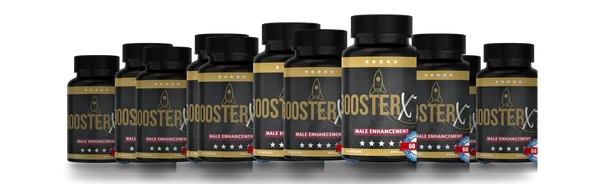
Order Booster XT on the official website.
Six named actives, a single daily capsule, one charge rather than a subscription, and sixty days to change your mind.
$294 — six bottles at $49 each
Order Booster XT On The Official WebsiteShips from the United States · 60-day money-back guarantee · one-time payment, no subscription · lot BXT-26/BD-8812