Booster XT Official Website › Guides
Men’s Supplement Guides
Two reference pieces that do not sell anything. One covers the ingredient classes men's formulas are built from and what the evidence behind each actually says. The other is a buying checklist, applied at the end to the product this website sells.
These two guides are the background reading behind every product page on this website. The first explains what nitric oxide precursors, carnitine, adaptogens and polyphenols do and where their evidence stops. The second is an eight-point checklist for buying any men's supplement, scored honestly against Booster XT at the end.
What a guide on a retailer’s website is for
A product page can only tell you about one product. Most of the decisions a buyer actually makes in this category happen before that: whether a whole class of ingredient is worth anything, what a label should look like, which claims mean something and which are decoration. Those questions do not fit on a product page and they are the ones that matter most.
So these two pieces are written to be useful even if you never buy anything here, and neither of them carries a purchase argument. The checklist in the second one is applied to our own product at the end and it does not score well, which is the test of whether a checklist was written honestly or reverse-engineered.
Neither guide is medical advice. Both are written from published research linked inline, from regulators and from neutral consumer bodies. The NIH consumer fact sheet is the single best thing to read alongside them, and it has nothing to sell.
The male vitality supplement guide, in outline
- Nitric oxide precursors. Arginine, citrulline and the beetroot family. Why citrulline replaced arginine in most formulas, and what the pooled blood pressure trials actually found.
- Carnitine and the energy claim. What fatty-acid transport is, why more of a transporter does not mean more transport, and where the male fertility evidence stands.
- Adaptogens and traditional roots. Maca, velvet bean and the gap between reputation and record, including the study that looked for a testosterone effect and did not find one.
- Polyphenols and the antioxidant claim. Pine bark, grape, and why the Cochrane review of one of them was so blunt.
- The four questions. Dose, form, standardisation and testing, which between them decide whether any of the above is relevant to the bottle in front of you.
The buying checklist, in outline
- Amounts printed per ingredient. The single most informative line on any label.
- Standardisation stated for every extract. Without it, a milligram figure is ambiguous.
- A third-party certificate of analysis. Naming a laboratory and a lot.
- A lot code on the bottle. Traceability, and what it enables.
- Named interactions. A formula that lists its own interactions is a formula somebody read.
- A refund window measured in days. From a stated date, with a named returns address.
- Claims that stay inside structure and function. And a page that names the ones it will not make.
- A contactable seller. Street address, telephone, and a desk that answers.
The guide then scores Booster XT against all eight. It passes four of them clearly, fails three, and the eighth is arguable. That is published rather than buried because a checklist that flatters the product it appears beside is not a checklist.
Sources with nothing to sell you
Everything on this website is published by a retailer. Read at least one source that is not. All four below are free, neutral and written by people with no commercial interest in what you decide.
NIH Office of Dietary Supplements
The consumer fact sheet on what supplements are and how they are regulated, and the performance-supplement fact sheet for the ingredients athletes actually use.
NCCIH
Dietary and herbal supplements, which is the best short explanation anywhere of how to weigh botanical evidence.
The FDA
Questions and answers on dietary supplements, and the notification list for products in this category found to contain undeclared drugs.
MedlinePlus
The dietary supplements overview, written for patients rather than for buyers.
How these guides are written
The same four rules that govern every page on this website, applied to two pieces that have nothing to sell.
- Claims come from the label, never from the sales page. Where a manufacturer's marketing claims more than a printed panel supports, the disagreement is printed rather than resolved quietly in the marketing's favour.
- Every citation was opened before it was published. Each PubMed identifier was checked against the NCBI summary interface. Three identifiers written from memory during the first draft of this site turned out to be entirely unrelated papers, which is exactly why the rule exists.
- Not published stays unpublished. Where a figure is not disclosed it is printed as not published rather than estimated, however awkward that looks on a page trying to sell something.
- Corrections move the date. When a guide changes, the review date at the foot of it moves forward. Write to [email protected] with the page, the sentence and what is wrong with it.
What these guides answer
The questions the order desk and the website desk are sent most often, and which page answers each one properly.
| The question | Where it is answered |
|---|---|
| Does citrulline actually do anything? | The male vitality guide, first section |
| Why does no formula print its amounts? | The buying checklist, check one |
| Do any of these raise testosterone? | The guide, third section, and the answer is no |
| What is a certificate of analysis? | The checklist, check three, and the batch page |
| Is this category safe to buy online? | The guide, final section, on the category hazard |
| How does your own product score? | The checklist, scored at four out of eight |
If your question is not in that table, the website desk reads [email protected] Mon–Fri 9:00am–5:00pm ET, and a question that turns into a new section of a guide is the most useful email anybody sends here.
Which of these to read first
Three routes through this material, depending on what you already know and what you are trying to decide.
You are comparing products
Start with the eight-point checklist. It is the shortest route to a decision, it works on any label in this category, and it ends with our own product scored against it.
Then read the testing page to see what the seals on a bottle actually mean before you weigh one against another.
You want to understand the ingredients
Start with the male vitality guide. It covers all four classes with the research linked inline, and it says where each one stops.
Then read the ingredients page, which is the same four classes as they appear on one specific label.
You have already ordered
Read the timeline page and the how-to-use page. Between them they cover when to judge it, how to measure it and what to do when a week goes wrong.
Then set a reminder for day fifty, dated from your purchase, which is the single most useful thing anybody does with this website.
The blog covers narrower questions in more depth: the dose gap on one named ingredient, the capsule-or-drops question, the full interaction list, and how to read a supplement panel that prints no numbers on it at all. The five posts are indexed here, and each one links back to the page on this website that carries the commercial version of the same question.

Every page, every journal post, the bottle facts and the ingredients go through review by Dr. Sevann Helo, MD before they ship. The seal beside this line is the manufacturer’s own “Doctor Formulated” mark. It names no clinician and cites no credential, so we do not treat it as a medical review and we have not invented one. What you get instead is a named desk with a method you can check: pages written from the Booster XT label and the paperwork this desk holds, published research linked in the sentence that uses it, and “not published” printed wherever a figure is not disclosed. Corrections are made on the page itself and the review date moves forward. Write to [email protected]. Last reviewed September 2026 by Dr. Sevann Helo, MD.
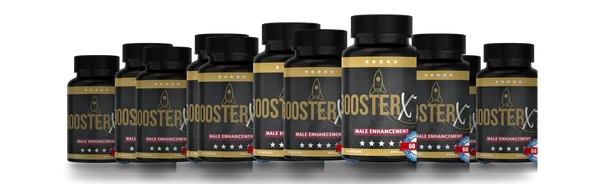
Order Booster XT on the official website.
Read the guides first. If the eight-point checklist still leaves you comfortable, the sixty-day window is the other half of the protection.
$294 — six bottles at $49 each
Order Booster XT On The Official WebsiteShips from the United States · 60-day money-back guarantee · one-time payment, no subscription · lot BXT-26/BD-8812