Booster XT Official Website › Blog › Maca, Pine Bark And The Evidence
Maca And Pine Bark: Where Reputation Runs Ahead Of The Record
Two of the six ingredients on this panel have large reputations and disappointing trial records, for two completely different reasons. Reading both carefully is the fastest education in how this category works.
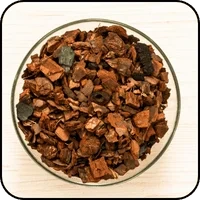
- Maca has too few trials, and the best-known one found no testosterone effect.
- Pine bark has plenty of trials, and a Cochrane review still found them too weak to use.
- Those are opposite failures, and both end in the same place.
- Neither is a reason to avoid them, and both are a reason to discount the claims attached to them.
Maca: too few trials
Maca is a Peruvian root vegetable, a brassica, related to radish and turnip. It has been eaten as food at altitude in the Andes for a very long time, and it arrives in supplements carrying a reputation for energy, stamina and libido.
The systematic review of maca for sexual function is the place to start. Its conclusion is measured and unflattering: few trials, mostly small, mostly of limited methodological quality, with a tentative signal on self-reported sexual desire and not much else that survives scrutiny.
That is the classic shape of a traditional botanical. It is not evidence that maca does nothing. It is evidence that nobody has run the studies that would tell you either way, and that the studies which do exist are too small to settle anything.
The maca study that costs the category most
Gonzales 2002 is the single most useful paper for reading men’s supplements honestly, and it is rarely cited on the pages that sell them.
It examined maca and sexual desire in adult men. It reported an effect on self-reported desire. And it specifically measured serum testosterone and found no change.
Sit with that for a moment. The best-known trial of one of the most popular ingredients in a category built on testosterone claims went looking for a testosterone effect and did not find one. The paper is in the title of its own conclusion.
This is why no testosterone claim appears anywhere on this website. Not because we are being cautious for legal reasons, although we are, but because the evidence for the ingredient most associated with the claim points the other way.
Pine bark: plenty of trials, still not enough
Maritime pine bark extract is the opposite case. It is not under-studied. It has been through dozens of trials across a dozen conditions, sold widely in a standardised form under a well-known trade name, and it has a large literature behind it.
It is a mixture of procyanidins and phenolic acids, and the proposed mechanism is the usual polyphenol story: antioxidant activity and an effect on the endothelium. There is nothing implausible about it.
The small study men’s formulas cite is Stanislavov 2003, which paired pine bark with L-arginine. It was a combination product, small, and never independently replicated at scale, which is a lot of qualifications for one citation to carry.
What the Cochrane review actually said
The Cochrane review examined the pine bark literature across a range of chronic conditions and concluded that the trials were small, short and too inconsistent to support any clinical use.
Cochrane reviews are written in careful language and that conclusion is blunt by their standards. It is also, importantly, not a finding that pine bark is useless. It is a finding that after all those trials, the evidence still does not support a recommendation.
That distinction matters because supplement pages routinely cite the existence of trials as though the existence were the finding. A long citation list is not a result. What the trials concluded is the result, and here the conclusion is that they were not good enough.
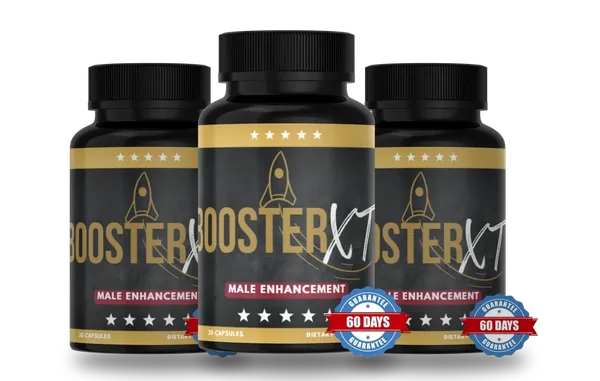
Six named actives, and an honest account of each one.
Booster XT names maca and pine bark on its panel. This website links the review that disappointed for each of them rather than the press release. Sixty days from purchase to change your mind.
$207 — three bottles at $69 each
Order Booster XT On The Official WebsiteShips from the United States · one charge, no subscription · 60-day money-back guarantee
Two opposite failures, one conclusion
| Maca | Pine bark | |
|---|---|---|
| Number of trials | Few | Many |
| Trial quality | Mostly limited | Mostly small and short |
| Best-known finding | An effect on self-reported desire, with no testosterone change | Too inconsistent to support clinical use |
| Why it fails | Not enough evidence | Enough evidence, and it did not hold up |
| Standardisation | Rarely stated | Available, and rarely stated on a multi-ingredient panel |
| Reasonable conclusion | Unknown | Unlikely to do much at supplement doses |
Those are genuinely different failures, and they should be weighed differently. An under-studied ingredient might turn out to work. A well-studied ingredient that keeps failing to show an effect probably does not have much of one.
The standardisation problem
There is a second problem sitting underneath both, and it is the one that makes almost all botanical citations shaky on a multi-ingredient label.
A botanical extract is defined by two things: how much of it there is, and how concentrated it is. An extract standardised to a stated percentage of its marker compound is a defined material. An extract with no ratio and no percentage could be almost anything.
The pine bark trials used a standardised extract at a stated milligram amount. A panel that says only “Pine Bark extract” is not naming the same material in any meaningful sense, and a citation to those trials is doing work the label cannot support.
The same trap catches grape. Most grape research is on seed extract or whole grape powder rather than skin, and swapping one for the other in a citation is one of the commonest moves in this category. We say so on the ingredients page about our own panel.
How a weak citation gets laundered
Watching a thin study turn into a strong claim is the most educational thing you can do in this category, and the process is remarkably consistent. It runs in four steps.
- A small study finds something. Twenty or thirty people, often unblinded, often combining two ingredients, often funded by somebody with an interest. It is published, which is fine. Small studies are how research starts.
- A secondary source summarises it without the caveats. A magazine or a supplement blog reports the finding and drops the sample size, the blinding and the combination. The qualification disappears at this step, not at the next one.
- A product page cites the secondary source. Or cites the study but only its abstract conclusion, alongside an ingredient name with no dose. The reader assumes the capsule contains what the study used.
- The claim detaches entirely. By this point “a small pilot reported improved scores on a self-report questionnaire” has become a headline on a bottle, and nothing in the chain was an outright lie.
The defence is to read the original, or at least the abstract, and to ask four questions of it: how many people, blinded or not, what dose, and what exactly was measured. Applied to the pine bark pilot those four questions deflate the citation almost entirely, and applied to the maca study they reveal a finding that argues against the claim it is usually attached to.
What traditional use is worth as evidence
Both of these ingredients arrive with an argument attached: people have used them for centuries. It is worth being precise about what that establishes, because the answer is not nothing and it is not much.
Long traditional use is genuine evidence about tolerability. A plant eaten as food by large numbers of people over generations is unlikely to be acutely toxic at the amounts people eat, and that is a real thing to know. Maca has that history. So does velvet bean, in cuisine as well as in medicine.
What traditional use does not establish is effect. It cannot, because nobody was running a control group, and because the conditions these plants were traditionally used for are mostly conditions that come and go on their own. A remedy taken during something that resolves by itself acquires a reputation it did not earn.
NCCIH puts this better than we can, and it is the single most useful page on the internet for reading botanical claims. The short version: traditional use tells you where to look, and a controlled trial tells you what you found.
What this means for a formula naming both
It means two of the six ingredients on this panel are there for reputation rather than for evidence, and that is worth knowing before you buy rather than after.
It does not mean the formula is a fraud. Traditional botanicals with thin evidence are ordinary in this category, and a product naming them is not doing anything unusual. What would be unusual is a page that cited their trials without mentioning what those trials concluded.
The practical upshot is to weight your expectations towards the ingredients with better evidence and stated mechanisms, which on this panel means citrulline and, to a lesser extent, carnitine and grape polyphenols. Then remember that none of them carries a published amount either. The buying checklist turns all of that into eight things you can check, and scores this product at four out of eight.
References
- Shin BC, Lee MS, Yang EJ, Lim HS, Ernst E. Maca (L. meyenii) for improving sexual function: a systematic review. BMC Complement Altern Med. 2010;10:44. https://pubmed.ncbi.nlm.nih.gov/20691074/
- Gonzales GF, Cordova A, Vega K, et al. Effect of Lepidium meyenii (MACA) on sexual desire and its absent relationship with serum testosterone levels in adult healthy men. Andrologia. 2002;34(6):367-72. https://pubmed.ncbi.nlm.nih.gov/12472620/
- Robertson NU, Schoonees A, Brand A, Visser J. Pine bark (Pinus spp.) extract for treating chronic disorders. Cochrane Database Syst Rev. 2020;9(9):CD008294. https://pubmed.ncbi.nlm.nih.gov/32990945/
- Stanislavov R, Nikolova V. Treatment of erectile dysfunction with pycnogenol and L-arginine. J Sex Marital Ther. 2003;29(3):207-13. https://pubmed.ncbi.nlm.nih.gov/12851125/
- Foshati S, Mirjalili F, Rezazadegan M, Fakoorziba F, Amani R. The effect of grape (Vitis vinifera) seed extract supplementation on flow-mediated dilation, blood pressure, and heart rate: A systematic review and meta-analysis. Pharmacol Res. 2022;175:105905. https://pubmed.ncbi.nlm.nih.gov/34798267/

Every page, every journal post, the bottle facts and the ingredients go through review by Dr. Sevann Helo, MD before they ship. The seal beside this line is the manufacturer’s own “Doctor Formulated” mark. It names no clinician and cites no credential, so we do not treat it as a medical review and we have not invented one. What you get instead is a named desk with a method you can check: pages written from the Booster XT label and the paperwork this desk holds, published research linked in the sentence that uses it, and “not published” printed wherever a figure is not disclosed. Corrections are made on the page itself and the review date moves forward. Write to [email protected]. Last reviewed September 2026 by Dr. Sevann Helo, MD.